Painting Over PVF2 Cladding
How to recoat PVDF and PVF2 fluorocarbon finishes on commercial cladding, including the unique preparation challenges that make fluorocarbon surfaces different from standard powder coat.
Read ArticleCurtain walling is one of the most recognisable features of the modern commercial built environment, and one of the most expensive to replace. On-site recoating extends facade life by 10–15 years at a fraction of replacement cost, restores commercial property value, and can be completed with minimal disruption to building occupants.
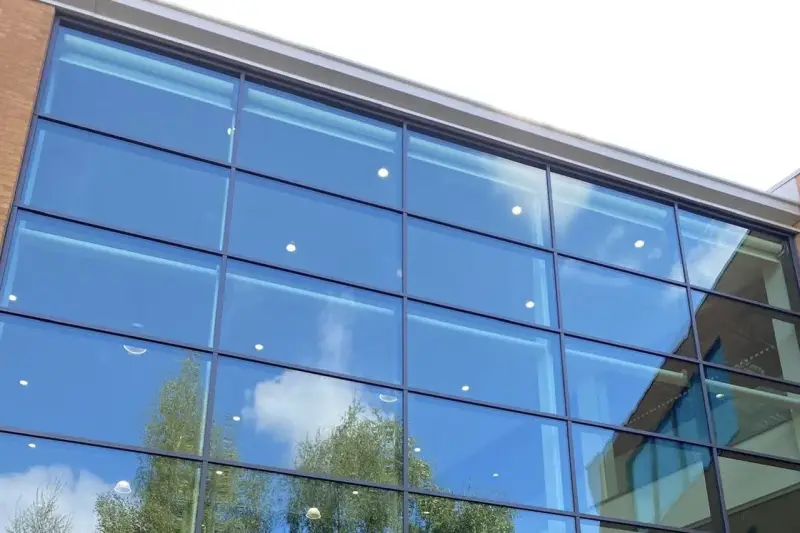
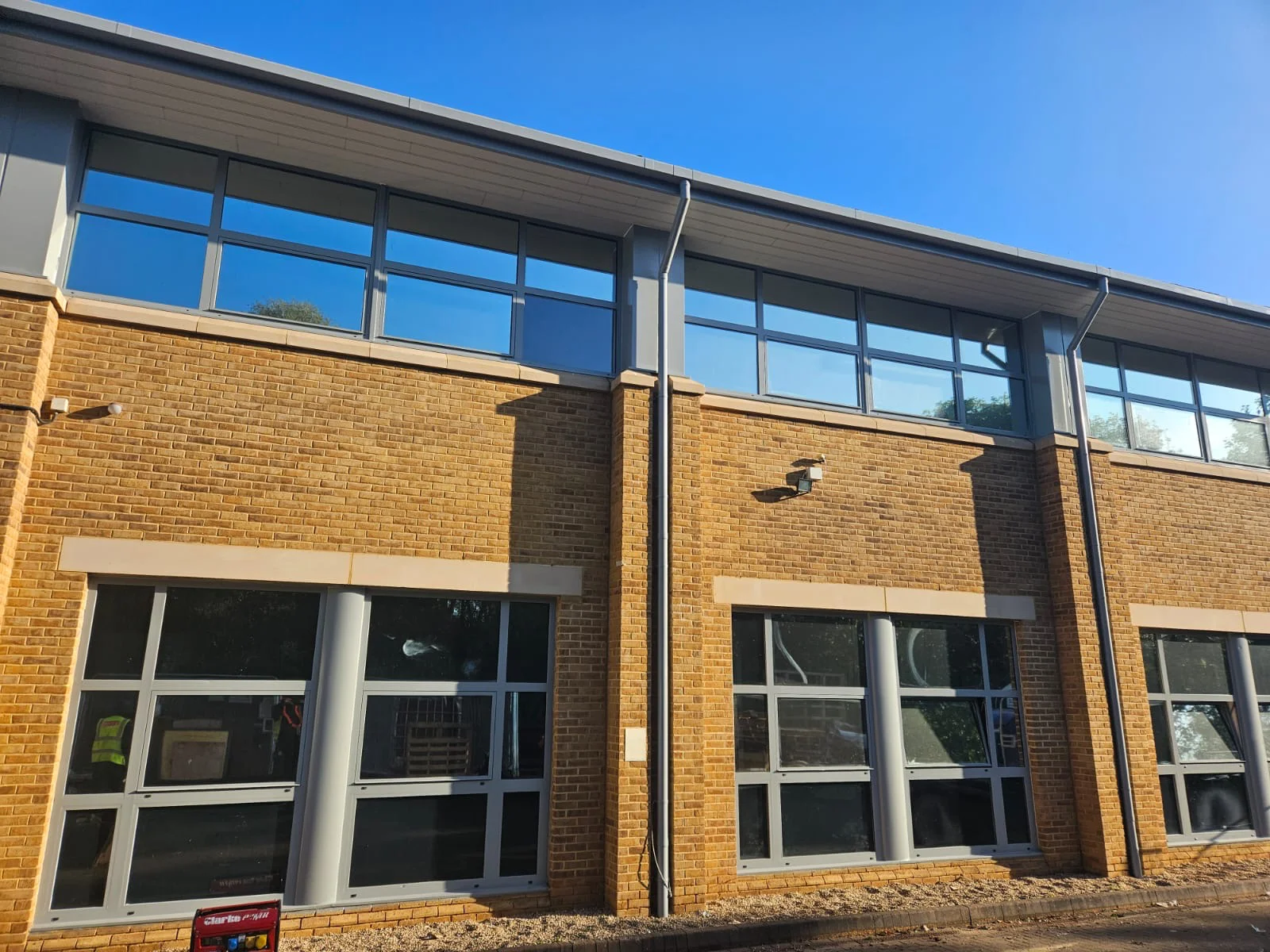
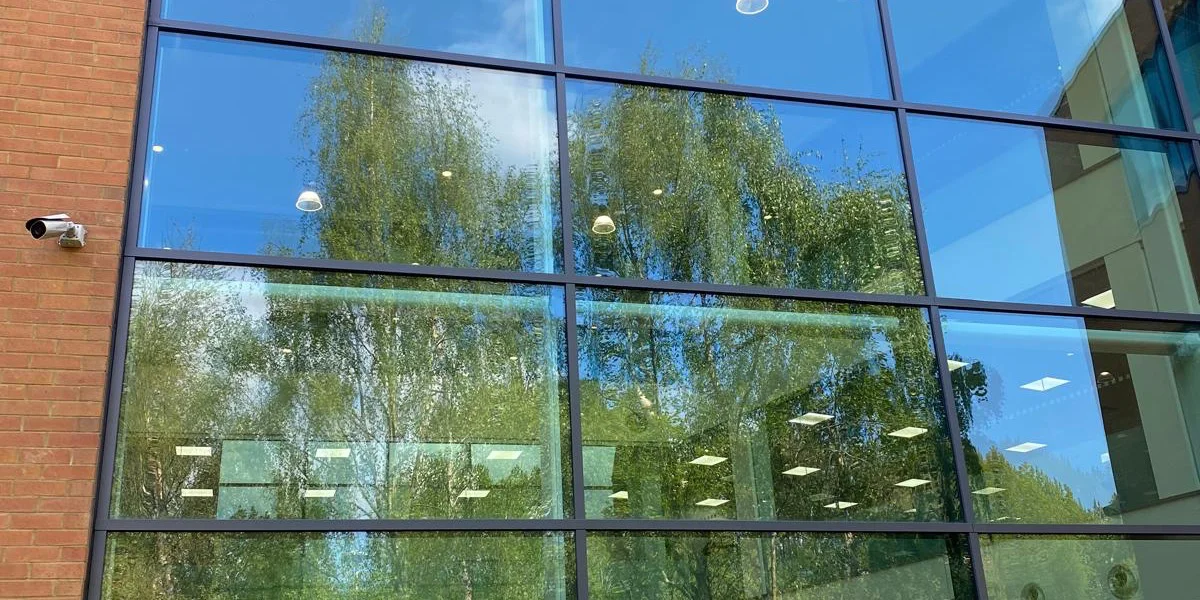
Curtain walling serves as the outer skin of multi-storey commercial buildings, office blocks, shopping centres, car showrooms, hospitals, and purpose-built commercial premises of all kinds. Rather than bearing any structural load, it attaches to the building's floors or structural columns and functions purely as the weather-tight envelope, incorporating glass and other infill materials within an aluminium framework.
The aluminium framing that makes up a curtain wall system is finished at the factory with a powder coating or anodised finish. This coating protects the aluminium from corrosion, provides the aesthetic appearance of the facade, and is typically expected to perform for 20 or more years without significant intervention. Eventually, however, through the combined effects of UV radiation, thermal cycling, atmospheric pollution, and inadequate maintenance, the original finish deteriorates. When it does, building owners face a significant decision about how to respond.
This guide explains what curtain walling is, why its finish deteriorates, how on-site recoating works, and what the process of assessing and specifying a curtain wall refurbishment programme looks like in practice.
Curtain walling is a system that uses a lightweight aluminium framework, the "curtain", to support the external skin of a building across multiple storeys. The curtain wall is suspended from or anchored to the primary building structure at each floor level or at structural columns, rather than bearing loads itself. Because it carries no structural load from floors or roof, the aluminium framing can be relatively slender and lightweight, allowing the large expanses of glazing that are characteristic of modern commercial architecture.
The typical curtain wall system consists of:
The concept of a non-structural external skin is much older than modern aluminium systems. The earliest precursors appeared in the late 18th century with the development of cast iron framing for industrial buildings. The Ditherington Flax Mill in Shrewsbury (1797), often cited as the world's first iron-framed building, allowed large windows to be incorporated because the outer wall was no longer needed to bear structural loads.
Cast iron and wrought iron frames with glass infill appear in industrial buildings. The non-load-bearing external wall concept is established as technically feasible.
Steel mullions, vertical frame elements dividing infill panels, begin to appear in commercial and institutional buildings. Large glazed facades become a feature of department stores and railway stations.
Horizontal transoms are developed alongside mullions to create the characteristic grid-like framing of modern curtain walling. The Lever Building in New York (1952) is widely cited as the first building to use a fully glazed curtain wall on a skyscraper.
Aluminium extrusions become the standard material for curtain wall framing, replacing steel. Aluminium offers the same structural capability at significantly lower weight, with the added benefit that it can be extruded into complex cross-sections to suit thermal break requirements and the concealed fixing of glazing. Factory powder coating and anodising become the standard surface finishes.
Aluminium curtain walling is the dominant facade system for commercial construction. Many of the buildings installed from the 1970s through the 2000s are now entering their first or second major refurbishment cycle, presenting the recoating opportunity addressed in this guide.
The factory-applied finish on aluminium curtain walling is subject to a range of deterioration mechanisms that, acting together over time, eventually bring the finish to a point where refurbishment is necessary:
Ultraviolet radiation is the primary cause of organic coating degradation on exterior facades. UV energy breaks down the polymer binder in the coating, releasing pigment particles as a fine powder, the process known as chalking. Chalking manifests first as a loss of gloss, then as a whitish powdery surface residue that transfers to the touch. South-facing and horizontal surfaces are most severely affected, as they receive the greatest cumulative UV dose. On a typical commercial building, south-facing curtain wall elevations may show visible chalking 5–10 years before north-facing elevations.
Aluminium has a coefficient of thermal expansion of approximately 23 µm/m/°C, meaning a 6-metre mullion will expand and contract by around 3.5mm between a cold winter night at −5°C and a hot summer day at 35°C. This constant movement creates stress at all points where the coating spans a joint or transition, capping edges, transom ends, and areas where aluminium sections butt together. Over thousands of thermal cycles, this stress causes micro-cracking and edge lifting of the coating film, providing pathways for moisture ingress.
Acid rain, vehicle exhaust particulates, and industrial pollutants deposit on curtain wall surfaces continuously. These deposits are mildly to moderately acidic and, if allowed to accumulate, particularly in sheltered areas that do not receive natural rainwashing, will incrementally etch and degrade the coating surface over time. Urban and industrial locations are significantly more aggressive environments for curtain walling than rural locations. Coastal environments add chloride ion exposure, which accelerates corrosion of any aluminium substrate exposed through coating breaches.
Perhaps the most important consequence of coating deterioration is the loss of weather protection. Curtain walling is designed to manage rainwater by directing it through drainage channels within the framing, but this management system depends on the integrity of the outer coating film and the weather seals. When coatings delaminate or crack, water reaches the aluminium substrate, causing oxidation. Aluminium oxide formation beneath the coating lifts and expands the film, accelerating delamination outward from the initial failure point. Left unaddressed, moisture penetrating through the outer skin can damage internal building fabric and insulation.
Some curtain walling systems, particularly those installed before powder coating became dominant in the 1980s, have anodised rather than powder-coated finishes. Anodising creates a hard aluminium oxide layer on the surface rather than a paint film. Over time, anodised surfaces can suffer from pitting, staining, and loss of the original gloss appearance, particularly in polluted or coastal environments. Anodised surfaces present different preparation challenges for recoating than powder-coated surfaces, as the anodic layer must be correctly treated before a new paint system will adhere reliably.
Before specifying a refurbishment programme, a thorough condition assessment of the curtain walling is essential. Attempting to recoat without understanding the full condition of the existing finish leads to wasted expenditure when areas that should have received additional preparation fail prematurely.
A professional condition assessment should include:
Close-up inspection reveals what cannot be seen from ground level. A drive-by survey of curtain walling will not reveal the full extent of coating condition. Many of the most important deterioration indicators, lifting edges at cappings, micro-cracking in coating around fasteners, adhesion loss in sheltered areas, are only apparent on close inspection from scaffold or access platform. Commissioning a rope access or scaffold-mounted condition survey before specifying the refurbishment scope is always money well spent.
On-site recoating costs a fraction of full curtain wall replacement. The saving is typically 4 to 8 times, enough to fund multiple recoating cycles for the cost of a single replacement programme.
A faded, chalking facade reduces the perceived value and lettability of a commercial property. A freshly recoated curtain wall immediately improves building appearance and supports occupancy and rental rates.
The recoating programme is an opportunity to update the building's colour, matching the existing finish or specifying a new one. Any RAL Classic, RAL Design, NCS, or British Standard colour can be matched.
The new coating system provides renewed protection against corrosion, acid rain, and UV degradation. A correctly specified 2K acrylic or primer-plus-topcoat system seals the substrate and extends the facade's protective function.
Extending the life of existing aluminium framing avoids the significant embodied carbon of manufacturing new curtain wall components. Recoating is the lower-carbon refurbishment choice for building owners with sustainability commitments.
On-site recoating takes place on the exterior of the building, there is no requirement to decant tenants or disrupt internal operations. The building remains fully occupied and operational throughout.
The preparation and application process for curtain walling recoating follows the same fundamental stages as other commercial aluminium recoating projects, with additional considerations for working at height across large facades:
Erect scaffold or position mobile elevated work platforms (MEWPs) to provide safe, stable access to all elevations. On buildings up to approximately eight storeys, system scaffold provides the most efficient access for operatives working across full elevations. On taller buildings or those where scaffold erection is impractical, suspended cradles or rope access may be used. The access method must be selected and specified before the recoating programme begins, it significantly affects programme duration and total project cost.
Clean all aluminium framing, cappings, and transoms with an appropriate metal cleaner, removing all atmospheric soiling, biological growth, pollution deposits, and chalking residue. Pay particular attention to sheltered areas, drainage channels, and horizontal surfaces where deposits accumulate over time. Flush all drainage channels to ensure they are clear and functional. Allow surfaces to dry fully before proceeding.
Mechanically abrade all aluminium surfaces to remove the gloss from the existing coating and create a key for the primer. In areas where the existing coating has delaminated, remove all loose material back to a firm edge and treat exposed substrate with etch primer immediately to prevent oxidation. Carry out any agreed weather seal replacements at this stage, as silicone and neoprene seal work must be completed before the topcoat is applied over adjacent aluminium surfaces.
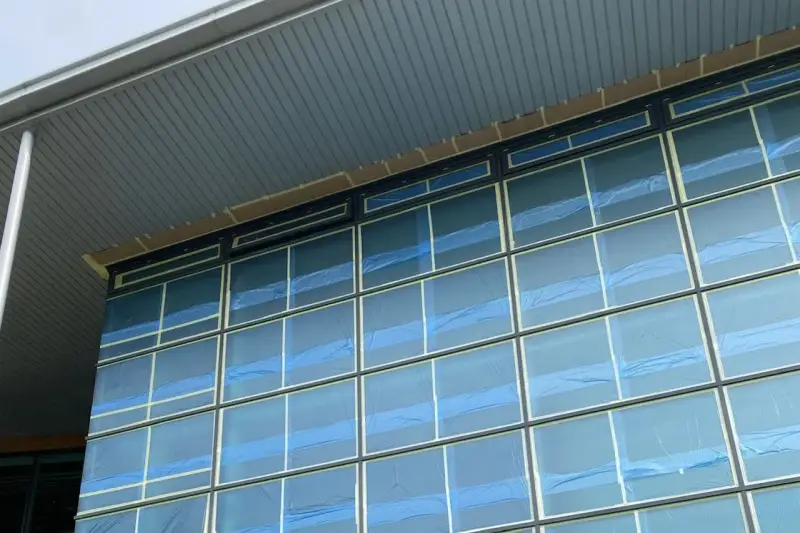
Mask all glazing, adjacent building fabric, and ground-level areas systematically before any spray application begins. On curtain walling, masking typically involves covering large areas of glass with plastic sheeting, with edges carefully taped to the aluminium framing. Ground-level areas must be protected from overspray drift, particularly when working at height where the spray pattern extends over a larger area relative to the surface being coated. Masking on multi-storey curtain walling is time-intensive and should be planned and costed carefully.
Apply a bonding primer compatible with the existing coating substrate, whether powder coat, anodised, or bare aluminium in repaired areas, across all framing surfaces. On curtain walling with an existing powder coat, the primer must be confirmed by the manufacturer as suitable for overcoating the existing system. On anodised surfaces, a specialist adhesion primer is required. Apply by airless spray in a thin, even coat, ensuring full coverage of rebates, cappings, and all faces of the profiled extrusions.
Apply the two-pack acrylic topcoat in the specified colour and gloss level by airless spray in two thin coats. On curtain walling, consistency of application technique at height is particularly important, maintaining the correct gun distance and stroke overlap on scaffold boards at 10 or 15 metres above ground level requires experienced operatives. Allow full cure of the first coat before applying the second. Once cured, carry out a final inspection and remove masking. Inspect the completed elevation from the ground level to confirm even colour and finish before the scaffold is struck.
Curtain walling refurbishment is a working-at-height activity and falls under the Work at Height Regulations 2005. Any contractor undertaking this work must have:
Since curtain walling spans multiple floors, only contractors with demonstrated experience in working at height on large commercial facades should be engaged for this type of project. The combination of spray application and elevated working introduces risks that require both technical painting knowledge and working-at-height competence.
At Vanda Coatings, we have been carrying out curtain walling recoating from scaffold and access platforms since 1997. Every project is accompanied by a full RAMS document covering the specific site, access method, and coating application procedures. All operatives are trained in working at height and hold CSCS cards. We carry full public liability insurance to the level required for major commercial projects and work regularly alongside main contractors and facilities managers on occupied commercial buildings.
Curtain walling is a non-structural external building envelope system using a lightweight aluminium framework to support glass, metal, or stone infill panels across the exterior of multi-storey commercial buildings. The factory-applied coating on the aluminium framing eventually deteriorates through UV exposure, thermal cycling, and atmospheric pollution, requiring refurbishment to maintain both appearance and weather protection.
Yes, in the majority of cases, curtain walling can be successfully recoated in situ without any dismantling. The aluminium framing, mullions, transoms, and cappings are prepared and coated on the building using airless spray application from scaffolding or MEWPs. Glass infill panels are masked to protect them from overspray. This approach is significantly less expensive and disruptive than dismantling and reinstalling the curtain wall system.
On-site recoating of curtain walling is typically 4 to 8 times cheaper than complete replacement. Replacement involves design work, new system manufacture, decanting occupants, structural works at fixings, making good internal finishes, and significant programme risk. Recoating requires scaffold erection, preparation, and coating application only, a much simpler scope with a fraction of the disruption. A typical mid-size curtain wall elevation can be recoated in 3–6 weeks; replacement of the same area would typically take 3–6 months.
Mullions are the vertical framing members in a curtain wall system, running continuously from floor to floor. They carry the wind load from glazing panels and transfer it to the building structure at fixings. Transoms are the horizontal framing members that span between mullions, dividing the facade into individual glazing bays. Together they form the characteristic grid-like framework of curtain walling. Both are typically aluminium extrusions and both require recoating when the original factory finish deteriorates.
A correctly specified and applied recoating system on aluminium curtain walling, using a compatible bonding primer and 2K acrylic topcoat, typically provides a service life of 10 to 15 years before the next maintenance cycle. The actual duration depends on the building's exposure, the quality of the coating system, and whether regular cleaning maintenance is carried out. Specification-grade systems carry manufacturer warranties of up to 10 years when applied to the specified film thickness.
Recoating in the same or a closely similar colour generally does not require planning permission, it is treated as maintenance. However, a significant colour change may require consent, particularly in conservation areas or for listed buildings. Always check with the local planning authority before proceeding with a colour change on a commercial building, and document the approval before work begins.
Related articles on commercial facade refurbishment and aluminium coating.
How to recoat PVDF and PVF2 fluorocarbon finishes on commercial cladding, including the unique preparation challenges that make fluorocarbon surfaces different from standard powder coat.
Read ArticleOur on-site curtain walling recoating service, full preparation, compatible primer, and 2K acrylic topcoat application from scaffold, with written specification and guarantee.
View ServiceHow airless spraying works, why it is the standard application method for commercial metalwork, and what correct technique and safety practice look like on commercial sites.
Read ArticleFree site surveys and specs for curtain walling recoating projects on commercial buildings across the UK. Tell us your building type, location, and current condition of the facade and we'll provide a full assessment and programme.