Refurbishing Curtain Walling
How to assess, prepare, and recoat aluminium curtain walling systems, covering deterioration patterns, access requirements, and coating specification for multi-storey facades.
Read ArticlePVF2 and PVDF fluorocarbon coatings are among the most durable factory-applied finishes in commercial construction. When they eventually fade, chalk, or delaminate, on-site recoating is the cost effective alternative to full panel replacement, if the preparation and coating selection are done correctly.
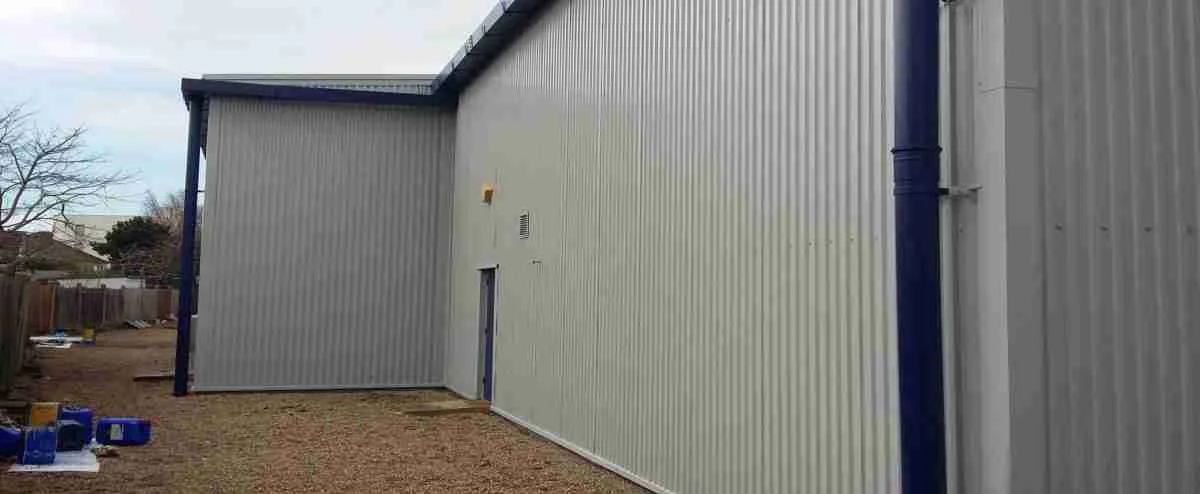
PVF2, also written as PVDF, polyvinylidene fluoride, is a high-performance wet paint system developed specifically for coating aluminium and steel in architectural and commercial applications. For decades it has been the factory finish of choice for curtain walling, rainscreen cladding, and composite panels on office buildings, shopping centres, hospitals, and industrial facilities across Britain.
Its exceptional resistance to UV radiation, atmospheric pollutants, and colour fading made it the benchmark finish for commercial cladding throughout the 1980s, 1990s, and 2000s. Many of the buildings clad in PVF2 during that era are now approaching or beyond the point where the original finish needs attention. The question facing building owners and facilities managers is straightforward: recoat, or replace?
This guide explains what PVF2 is, why it eventually fails, and, critically, how to recoat it correctly on site so the new finish bonds properly and lasts.
PVF2 and PVDF are different names for exactly the same coating chemistry. Polyvinylidene fluoride is the IUPAC chemical name; PVF2 is an older European commercial designation based on the chemical formula PVF₂. In practice, both terms appear on specification documents, product data sheets, and building surveys, they describe an identical material.
You may also encounter the trade name Kynar 500, a specific PVDF resin produced by Arkema that requires a minimum of 70% PVDF content to carry the designation. Kynar 500-based coatings are widely regarded as the benchmark for fluorocarbon cladding performance. The AAMA 2605 specification in the USA and equivalent European standards reference minimum PVDF content as a quality threshold.
PVDF is classified as a thermoplastic fluoropolymer. Its outstanding performance derives from the fluorine-carbon bond in the polymer chain, which is one of the strongest bonds in organic chemistry. This molecular structure makes PVDF coatings highly resistant to the UV radiation, ozone, and acid rain that degrade conventional organic paints, explaining why factory-applied PVF2 finishes on cladding routinely last 20–30 years without significant colour change or film degradation.
No coating lasts indefinitely, and PVF2 is no exception. The mechanisms of deterioration are well understood:
Prolonged UV exposure gradually breaks down the PVDF polymer binder, causing chalking, a powdery surface residue, and progressive colour fade. South-facing elevations and horizontal surfaces deteriorate fastest. After 25–30 years, chalking can be severe enough to reduce film integrity.
Although PVF2 resists acids and pollutants better than most organic coatings, prolonged exposure, particularly in urban or coastal environments, causes incremental surface etch. Sheltered areas that retain moisture and atmospheric deposits accelerate deterioration disproportionately.
Metal cladding expands and contracts significantly with temperature changes, aluminium at around 23 µm/m/°C. Over thousands of heating and cooling cycles, this stresses the coating film at joints, fixings, and panel edges, leading to micro-cracking, edge lifting, and eventual delamination.
Areas around rivets, screws, and fixings are stress concentration points. The coating is most likely to crack, blister, or lift first in these zones. Once the film breaks at a fastener, moisture ingress can cause corrosion beneath the coating, spreading delamination outward.
PVF2 cladding should be cleaned at least every six months to remove pollutant deposits that can chemically attack the surface over time. Buildings that have not been cleaned regularly, particularly on sheltered elevations, show accelerated deterioration compared to well-maintained counterparts.
Once PVF2 film integrity is breached, by chalking, cracking, or delamination, water can reach the substrate. On aluminium this causes white oxide formation. On steel substrates, red corrosion follows. Both conditions expand beneath the coating and accelerate failure progressively.
PVF2's outstanding weather resistance is also what makes it difficult to paint over. The same molecular structure that resists UV and chemical attack also resists adhesion, most conventional coatings applied directly to a fluorocarbon surface without adequate preparation will peel or delaminate within months.
The key challenges are:
None of these challenges are insurmountable, but they do require specialist knowledge of both the substrate and the coating system, and they confirm that recoating PVF2 cladding is not a job for a general decorator.
A site survey resolves the uncertainty. The most important step before deciding between recoating and replacement is a professional condition survey of the existing cladding. A thorough inspection, including adhesion testing of the existing coating, assessment of any substrate corrosion, and identification of delamination patterns, gives you the evidence base to make the right decision. Vanda Coatings provides free site surveys and written condition reports for commercial cladding projects.
Successful recoating of PVF2 or PVDF fluorocarbon cladding depends on following a rigorous preparation and application process. Every stage matters, failures almost always trace back to shortcuts taken during preparation.
Before any preparation work begins, carry out a thorough condition survey of the entire cladding area. Test adhesion of the existing coating using cross-cut or pull-off adhesion tests across multiple elevations and panel types. Identify zones of delamination, chalking, surface contamination, and substrate corrosion. This assessment determines the scope of preparation required and informs the coating specification.
Thoroughly clean all cladding surfaces using an appropriate metal cleaner or low-pressure wash. The objective is to remove all atmospheric soiling, biological growth, pollution deposits, oils, and chalking residue from the existing PVF2 surface. Sheltered areas and zones around fasteners typically require extra attention. Allow the surface to dry fully before proceeding, moisture trapped beneath masking or primer is a common cause of subsequent coating failure.
Mechanically abrade the entire cladding surface using nylon pads or fine-grit abrader, equivalent to P320 grit. The aim is to remove the gloss from the existing fluorocarbon surface and create a mechanical key for the primer. This step is essential and cannot be replaced by chemical treatments alone. On areas where the original PVF2 has chalked significantly, additional abrasion may be needed to remove the powdery surface layer entirely. Remove all abraded dust using tack cloths before priming.
Where adhesion testing has identified zones where the original PVF2 has delaminated or is lifting, these areas require additional preparation before priming. Loose coating should be removed back to a firm edge. Exposed substrate must be treated with a suitable etch primer immediately to prevent oxidation. On aluminium, aluminium oxide forms rapidly on bare metal and must be removed and sealed before the main primer coat is applied.
Apply a bonding primer specifically confirmed as compatible with fluorocarbon substrates. Not all primers adhere well to PVF2, the primer specification must be verified with the manufacturer. Apply the primer in a thin, even coat by airless spray, ensuring full coverage of all faces, edges, and zones around fasteners. Allow to cure to the manufacturer's specified minimum overcoat time before topcoat application. Do not overcoat before the minimum time, premature topcoating traps solvent and reduces adhesion.
Apply a two-pack (2K) acrylic polyurethane topcoat by airless spray in two thin coats, allowing adequate flash-off between coats as specified in the product data sheet. Two thin coats produce better adhesion, more even colour, and fewer defects than a single thick coat. The 2K acrylic chemically cures to form a cross-linked film with excellent UV resistance, colour retention, and flexibility to accommodate the thermal movement of the cladding panels. Match the specified colour using RAL, BS, or NCS references.
After the topcoat has cured, carry out a final inspection of the completed work including a cross-cut adhesion check on a representative sample of panels on each elevation. Document the results. A well-specified and correctly executed recoating system on PVF2 cladding should pass adhesion testing comfortably and provide a service life of 10–15 years before the next maintenance cycle is required.
The choice of topcoat system for overcoating PVF2 cladding is important. The options most commonly specified by professionals are:
The most widely used system for overcoating fluorocarbon cladding in the UK commercial sector. Two-pack acrylics combine excellent adhesion to primed fluorocarbon substrates with outstanding UV and weathering resistance, good colour and gloss retention, and the flexibility needed to accommodate thermal movement in large cladding panels. Applied by airless spray, a 2K acrylic system produces a smooth, uniform finish that closely replicates the appearance of the original factory coating. Warranty periods from major manufacturers for correctly applied 2K acrylic systems on primed aluminium cladding typically run to 10 years.
Some manufacturers produce topcoat systems that incorporate fluoropolymer resins alongside acrylic binders, offering enhanced UV resistance closer to that of the original PVF2 system. These products command a premium and are specified where maximum colour retention over a long service life is the primary objective, for example, on landmark buildings or where the next recoating cycle is planned to be 20 or more years away.
Do not attempt to recoat PVF2 cladding with single-pack or water-based brush-applied paints. These systems lack the chemical resistance, UV durability, and adhesion characteristics needed for exterior fluorocarbon substrates. They will appear adequate immediately after application but will typically fail, chalking, peeling, or delaminating, within 2–3 years, leaving the building in a worse condition than before and the cost of the failed work wasted. Professional specification and application are essential.
PVF2 cladding is almost always located on the exterior of multi-storey commercial buildings. Recoating requires access to every panel face, which means working at height on scaffolding, mobile elevated work platforms (MEWPs), or suspended cradles. This is a significant component of both the cost and the planning requirements of any recoating project.
For buildings up to approximately eight storeys, scaffolding typically provides the most cost effective and practical access solution, allowing operatives to work efficiently across full elevations. On taller buildings or those where scaffolding erection is impractical, for example in congested urban sites, MEWPs or cradle systems may be specified. The access method affects both the programme duration and the overall project cost, and should be factored into the decision between recoating and replacement.
All work at height must comply with the Work at Height Regulations 2005. Operatives must be appropriately trained and equipped; risk assessments and method statements must be in place before work commences.
Recoating presents an opportunity to update or change the cladding colour, something that panel replacement also offers, but at significantly higher cost. When selecting a new colour for PVF2 cladding overcoating, consider:
The finish quality and long-term durability of a PVF2 recoating project depend entirely on the skill and experience of the contractor carrying out the work. Airless spray application on large cladding elevations at height requires:
At Vanda Coatings, we have been recoating commercial cladding and curtain walling systems, including PVF2 and PVDF fluorocarbon substrates, since our founding in 1997. Every project is specified by our technical team, with coating system selection, primer compatibility, and application method confirmed before work begins. We carry full public liability insurance and provide written specifications and guarantees with all commercial cladding recoating projects.
Yes, PVF2 and PVDF fluorocarbon cladding can be successfully recoated on site, provided the existing finish is correctly prepared. Mechanical abrasion and an appropriate bonding primer are essential steps before any topcoat is applied. A correctly prepared and primed fluorocarbon surface will accept a high-performance 2K acrylic topcoat that, when properly applied, provides a durable, weather-resistant finish lasting 10–15 years.
PVF2 and PVDF are different names for the same coating chemistry, polyvinylidene fluoride. PVF2 is the older European commercial designation; PVDF is the IUPAC chemical name. Both appear on specification documents and product data sheets and describe an identical material. Kynar 500 is a specific PVDF resin requiring at least 70% PVDF content, widely regarded as the benchmark for fluorocarbon cladding performance.
Factory-applied PVF2 coatings on aluminium cladding typically last 20–30 years in normal commercial environments. Coastal or heavily polluted environments can reduce this to 15–20 years. Sections around fasteners, sheltered areas prone to dirt retention, and south-facing elevations tend to deteriorate fastest. Regular cleaning every six months extends service life considerably. A correctly applied on-site recoating system should provide a further 10–15 years of service.
Correct preparation is the most critical stage. The process involves: thorough cleaning to remove all surface contamination; mechanical abrasion to break the gloss and create a key for the primer; inspection and treatment of any areas where the existing coating has blistered or delaminated; application of a compatible bonding primer; and then application of the 2K acrylic topcoat system. Skipping or inadequately completing any of these steps leads to adhesion failure.
A two-pack (2K) acrylic polyurethane coating is the most widely specified overcoat for PVF2 and PVDF fluorocarbon cladding. Two-pack acrylics offer excellent adhesion to primed fluorocarbon surfaces, outstanding UV and weathering resistance, and good colour retention. The primer beneath must be confirmed compatible with both the fluorocarbon substrate and the chosen 2K topcoat system.
On-site recoating is almost always significantly cheaper than cladding panel replacement, typically by a factor of 3 to 6 times, depending on building height, panel system, and access complexity. Panel replacement involves scaffolding, panel removal, new panel manufacture with lead times of 8–12 weeks for bespoke profiles, installation, and making good the building fabric. Recoating involves preparation and coating application only, a much simpler, faster scope of work causing minimal disruption.

Related articles on commercial cladding and surface coating.
How to assess, prepare, and recoat aluminium curtain walling systems, covering deterioration patterns, access requirements, and coating specification for multi-storey facades.
Read ArticleOur on-site cladding painting service for commercial buildings, covering rainscreen cladding, composite panels, and profiled steel sheeting across the UK.
View ServiceWhat 2K acrylic paint is, how the chemistry works, and why it is the standard coating system for commercial metalwork and cladding recoating projects.
Read ArticleSee It In Practice
See how we transformed failing, chalking cladding at occupied commercial premises in Bristol, restoring the facade to a consistent professional finish.
View Case StudyFree site surveys and specs for commercial cladding recoating projects across the UK. Tell us your building type, location, and the condition of your existing cladding and we'll provide a full assessment and coating recommendation.