Painting Lift Doors: The Complete Guide
How electrostatic spray painting of lift doors works, the process steps, why electrostatic is the correct method, colour options, and recoating versus replacement.
Read GuideAged lift doors in an occupied Liverpool office block were recoated in situ using electrostatic spraying, multiple colours, overnight schedule, two-pack acrylic system, with zero disruption to the occupied building and a factory-quality finish throughout.
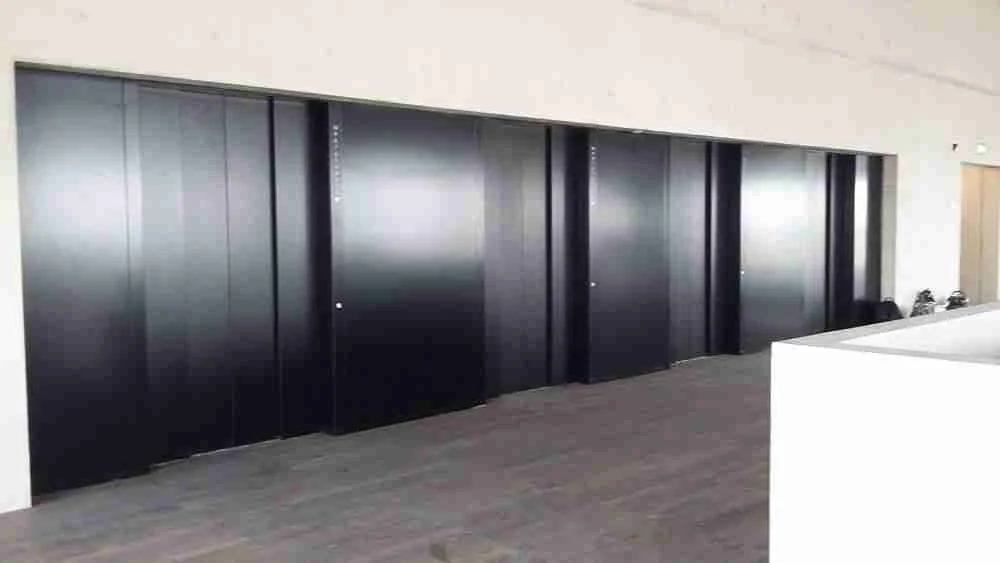
Lift doors in commercial office buildings accumulate visible wear faster than almost any other interior surface. Daily contact from people, trolleys, and equipment leaves scratches, scuffs, and dents in the finish, and over time, what was once a clean, professional lobby appearance begins to look neglected. When a Liverpool office block client approached us with exactly this situation, the brief was clear: modernise the lift doors with a colour refresh, work around the occupied building, and produce a finish that would last.
This case study documents how the project was scoped, scheduled, and executed, the method selection, the paint specification, the practical challenges of working in a live environment, and the outcome.
The client managed a multi floor commercial office block in Liverpool city centre. The lift landing doors throughout the building had aged, their original factory finish was scratched, marked, and in places worn through to the substrate. The building had also undergone a partial interior refurbishment, and the existing door colours no longer complemented the updated lobby and corridor scheme.
The client's brief had two elements. First, the doors needed to be fully recoated to eliminate the visible wear and restore a uniform, clean appearance. Second, different floors were to receive different colours, a deliberate design decision that allowed each floor to carry its own identity within the building's overall scheme.
A further constraint was operational: the building was occupied throughout the working week, with tenants on multiple floors. Any recoating programme had to be structured so that building access, including lift access, was maintained at all times during business hours, and so that no floor lobby was left in a mid-process state when occupants arrived in the morning.
After a site visit and discussion with the client's facilities team, electrostatic spray painting was confirmed as the appropriate application method. Three factors drove this decision.
Minimal overspray in a confined environment. Lift lobbies are enclosed spaces with decorative wall finishes, flooring, and sensitive button console housings in close proximity to the door panels. Electrostatic spraying, where electrically charged paint particles are attracted to the earthed metal surface, produces significantly less drifting overspray than conventional airless or HVLP methods. This was critical in protecting the surrounding lobby finishes without needing to extend masking to the entire lobby space.
Wrap-around coverage on door edges and frames. Door edges and frame sections are the areas of a lift door that show wear most quickly, they take the most direct mechanical contact. Electrostatic application wraps the charged particles around these edges, producing consistent coverage in the areas that need it most, without requiring additional brush passes that would compromise finish uniformity.
Speed of application relative to finish quality. The efficiency of electrostatic transfer means large areas of door panel can be coated quickly, reducing the time the lobby needs to be cordoned off during each working session.
The topcoat specified for this project was a two-pack acrylic system, the standard coating for commercial metalwork requiring high durability and abrasion resistance.
Two-pack acrylic (2K acrylic) consists of a pigmented base component and a separate hardener that are mixed in the correct ratio immediately before application. Once mixed, a chemical cross-linking reaction takes place as the film cures, producing a coating significantly harder and more resistant than single-pack alternatives. This cross-linked film structure gives 2K acrylic its key properties:
Each colour was mixed individually to the client's specified RAL or BS reference before spraying on the relevant floor. Gun and hose were flushed thoroughly between each colour change to ensure no contamination between batches.
Electrostatic application produces a smooth, even coat with no drips, runs, or brush-mark texture. The charged-particle attraction delivers consistent film build across flat panels and wrapped coverage on edges and profiles.
The electrostatic attraction between charged paint particles and the earthed metal surface contributes to strong initial bond formation, complementing the chemical adhesion of the primer and 2K topcoat system.
Less drifting overspray means less paint wasted and less contamination of surrounding surfaces. This reduces masking requirements, protects adjacent lobby finishes, and makes the process more efficient overall.
The efficiency of electrostatic transfer allows large door panel areas to be coated in a single pass with excellent coverage. Combined with the fast-cure characteristics of 2K acrylic, each floor was completed within a single overnight session.
The high transfer efficiency of electrostatic spraying means more of the mixed coating ends up on the door surface and less is lost to overspray. This reduces paint consumption and is a measurable environmental benefit on multi floor programmes.
Electrostatic spraying's low overspray characteristics, combined with an overnight schedule, allow lift door recoating to proceed in fully occupied commercial buildings without requiring tenant decant or extended access restrictions.
A pre-project site visit established the number of door panels per floor, the existing finish condition, any areas of damage requiring remedial preparation, and the access and cordoning arrangements for each lobby. A floor-by-floor colour schedule was agreed with the client. An overnight working programme was set with facilities management, including communication to building tenants.
On arrival each evening, the working lobby was cordoned off with barriers and advisory notices. Polythene sheeting was taped to adjacent wall surfaces, skirting boards, and floor coverings. Button console housings, door sensors, and threshold strips were individually masked with masking paper and tape to protect all mechanism faces and surrounding finishes from any overspray.
All door faces, edges, frames, and panels were cleaned to remove grease, traffic film, and surface contamination. Scratches, dents, and surface defects were filled and abraded to a smooth profile. A mechanical abrade across the full door surface created the key required for primer adhesion. Any areas of corrosion or substrate exposure were treated and primed locally before the full primer coat was applied.
A primer coat compatible with the existing substrate and the specified 2K acrylic topcoat was applied across all prepared surfaces. After adequate flash-off time, the two-pack acrylic topcoat in the correct floor colour was applied electrostatically in two thin passes, allowing flash-off between coats. Two thin coats, rather than a single heavy application, produce a more uniform film thickness and are less prone to running or sag on vertical door faces.
Once the topcoat had been applied and sufficient initial cure time observed, all masking materials were carefully removed and the lobby inspected for any edge bleed, touch-in requirements, or surface debris. The lobby was left clean and fully presentable. Barriers were removed before the building opened, and the coating had reached overnight handling strength, the doors were ready for normal use by the start of business.
The lift doors across all floors were successfully recoated to the client's colour specification. The electrostatic application produced a smooth, uniform finish across all door panels, frames, side sections, and edges. No contamination of lobby wall finishes, floor coverings, or button console housings was recorded. Building access was maintained throughout the project, lifts on adjacent shafts remained operational during each floor's overnight working session.
The client confirmed satisfaction with both the finished result and the conduct of the project. The multi-colour specification was delivered accurately across the different floors, and the 2K acrylic finish provides the hardness and abrasion resistance appropriate for daily lift lobby use.
Vanda Coatings has specialised in electrostatic spraying on commercial metalwork for over 25 years. Projects in occupied buildings, office blocks, hotels, hospitals, residential blocks, represent a significant portion of our lift door work. If you have aged or discoloured lift doors that need refreshing without structural works or extended downtime, we provide free site surveys and fixed written quotations across the UK.
The building was occupied throughout the project, so minimising overspray and disruption to surrounding lobby finishes was the primary constraint. Electrostatic spraying was selected because the electrically charged paint particles are attracted to the earthed metal door panels, producing minimal overspray compared to conventional airless or HVLP methods. This allowed work to proceed in the occupied lobby without risk of paint contaminating wall finishes, floor coverings, or button console housings.
A two-pack acrylic system was specified for the topcoat. Two-pack acrylic, sometimes called 2K acrylic, uses a base component and a hardener that react chemically to form a cross-linked film of significantly greater hardness, chemical resistance, and abrasion resistance than single-pack alternatives. For lift doors subject to daily contact and mechanical abrasion, 2K acrylic is the appropriate specification.
Yes. Each door or floor can be specified in a different colour from the RAL, British Standard, or NCS range. On the Liverpool project, the client requested a variety of colours across different floors, each was mixed to specification and applied in sequence. Changes between colours require a thorough gun and hose flush between batches, which is standard practice and does not significantly extend project time.
Work was scheduled outside business hours, commencing each evening after the main occupancy period and completing before the building opened the following morning. The lobby on the working floor was cordoned off during active spraying, with adjacent lifts remaining operational to maintain building access throughout. The coating reached overnight drying and handling strength, so lift doors were ready for normal use by the following morning.
The existing door surfaces were cleaned to remove grease, traffic film, and surface contamination. Scratches, dents, and surface defects were filled and abraded to a smooth profile. The full surface was then mechanically abraded to provide a key for the primer coat. Any corrosion or substrate exposure was treated and primed locally before the full primer system was applied across all surfaces.
The lift doors across all floors were successfully recoated in the client's specified colour range. The electrostatic application produced an even, uniform finish across all door panels, frames, and side sections. The client expressed satisfaction with both the quality of the finished result and the minimal disruption to building operations during the project. No contamination of adjacent lobby surfaces was recorded.

More from our resources on lift door painting and electrostatic spraying.
How electrostatic spray painting of lift doors works, the process steps, why electrostatic is the correct method, colour options, and recoating versus replacement.
Read GuideOur on-site electrostatic painting service for commercial metalwork, lift doors, radiators, office interiors, structural steelwork, and more.
View ServiceOn-site recoating of commercial staircase steelwork, handrails, balustrades, and structural elements, the same high-durability finish applied to lift door metalwork.
View ServiceSee It In Practice
See how we recoated 36 lift door faces across a live occupied office building, staged to avoid disruption to building occupants.
View Case StudyFree site surveys and fixed-price quotes for lift door recoating projects across the UK, including multi floor programmes, out-of-hours scheduling, and multi-colour specifications. Tell us your building, and we'll assess, specify, and quote.