How to Paint Plastisol Cladding
The preparation and application process for recoating Plastisol-finished cladding panels on commercial and industrial buildings.
Read ArticleMetal cladding is found on interior walls as well as building exteriors, particularly in warehouses, factories, cold stores, and industrial units. Yes, interior cladding can be painted, and when the correct preparation and coating system is used, the result is as durable as a factory-applied finish.
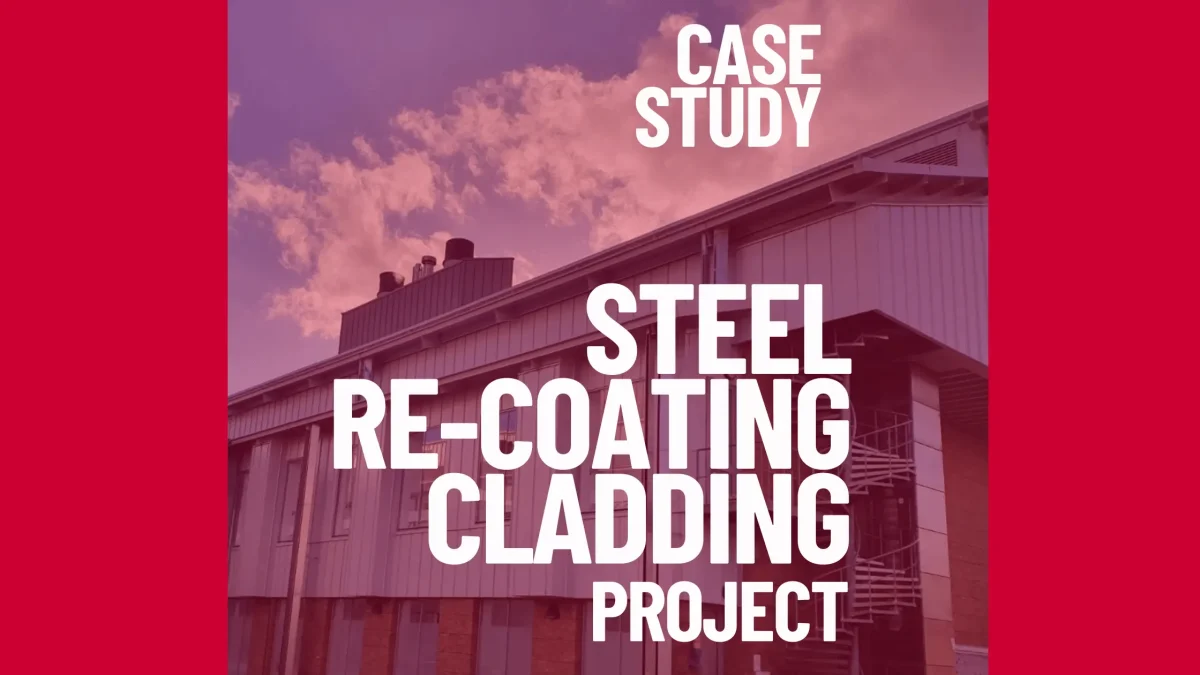
Metal cladding is most commonly associated with building exteriors, the corrugated steel or aluminium panels that clad the walls of warehouses, industrial units, retail parks, and commercial buildings across the UK. What is less often discussed is that the same cladding materials appear on interior walls: cold-store linings, factory partition walls, internal loading bay walls, and plant room panels.
These interior surfaces are subject to the same deterioration as external cladding, moisture ingress, impact damage, and gradual breakdown of the original factory-applied coating, and the question of whether they can be painted on-site is a common one. The answer is yes, provided the preparation process is followed correctly and the right coating system is specified.
The most common interior metal cladding consists of corrugated profiled steel panels, typically supplied from the manufacturer with a factory-applied protective coating. The two most prevalent factory finishes are:
Both finishes are durable when maintained, but they degrade over time, particularly in environments with temperature fluctuations, condensation, impact from racking or machinery, or chemical exposure. When the original coating begins to fail, moisture can reach the metal substrate and corrosion begins.
In unheated storage facilities, the temperature inside can swing dramatically between seasons, in some cases approaching the same conditions as the exterior. Condensation on cold steel surfaces is a persistent problem in these environments, and even a small area of coating failure is enough to allow moisture to undercut and spread beneath the surrounding intact finish.
Beyond corrosion protection, interior cladding is often repainted for commercial and operational reasons:
Key point: Recoating existing interior cladding is significantly cheaper than panel replacement. A professional on-site spray programme restores full protective and decorative performance without the disruption, structural implications, or cost of stripping and re-cladding.
This is the most important technical point in the entire process. Off-the-shelf emulsion, gloss, oil-based, and general-purpose acrylic paints are not suitable for metal cladding, whether interior or exterior.
The reasons are straightforward:
The correct solution is a specialist cladding coating system, bonding primer plus a purpose-formulated cladding topcoat, applied by airless spray for uniform coverage across the corrugated profile.
| Factor | Professional spray application | DIY brush/roller application |
|---|---|---|
| Coverage on profiled panels | Uniform, spray penetrates corrugated peaks and troughs evenly | Uneven, brush misses troughs; roller cannot reach recesses |
| Coating system compatibility | Specialist cladding-specific system, correctly specified | Risk of using incompatible products, adhesion failure likely |
| Surface preparation | Full degreasing, keying, cut-edge treatment, priming | Typically inadequate, leads to premature failure |
| Speed | Fast, large areas completed in hours by spray | Very slow, corrugated profiles are extremely labour-intensive to paint by hand |
| Finish quality | Factory-quality, smooth, consistent | Brush marks and uneven film visible |
| Durability | 10–15 years with correct system | 2–4 years before visible failure |
The following is the correct sequence for a professional interior cladding recoat. Each step is essential, skipping or shortcutting preparation steps is the primary reason recoat programmes fail prematurely.
Any flaking, bubbling, or delaminating coating must be removed before any other work begins. Wire brushing or scraping is suitable for localised areas; for large areas of severe coating failure, grit blasting or soda blasting may be required to take back to a clean metal surface. Leaving failed coating in place and painting over it will result in the new coating delaminating along with the old.
Cut edges, the exposed raw metal at panel ends and around fixings, are the most vulnerable areas of cladding panels. If corrosion is present at these points, it must be treated with a specialist cut-edge corrosion sealant before any topcoat work begins. Painting over active corrosion will not stop its progression; the sealant creates a barrier that prevents moisture ingress at these critical points.
The entire surface must be thoroughly cleaned with a degreasing agent to remove oils, dust, mould, and any contamination that would prevent adhesion. Interior cladding in industrial environments often carries a film of airborne oil or process residue that is invisible to the eye but will cause adhesion failure if not removed. In heavily contaminated environments, a sterilisation wash may be required in addition to standard degreasing.
All cleaning products must be thoroughly rinsed from the surface. Any residual degreaser or cleaning chemical left on the panel will interfere with primer adhesion. Allow the surface to dry completely, applying primer to a damp surface is a common cause of early adhesion failure, particularly in the cool, humid conditions typical of unheated warehouses.
The surface must be abraded to provide mechanical adhesion for the primer. On intact Plastisol or PVDF-coated panels, light sanding with an appropriate grade of abrasive paper or a scotch pad keys the surface without damaging the underlying substrate. The edges of any areas where coating has been removed should be feathered so that there is a smooth transition rather than a visible step at the boundary of old and new coating.
Sanding generates fine dust that must be completely removed before priming. Brush down and vacuum thoroughly, then wipe the surface with a clean tack rag to capture any remaining fine particles. Any dust left on the surface will be trapped in the primer film, producing a textured finish and reducing adhesion.
All areas that are not to be coated, doors, windows, pipework, conduit, floor areas, machinery, and adjacent wall surfaces, must be masked before spraying begins. Interior environments have more obstacles and adjacencies than open external elevations, so thorough masking takes additional time but is essential to prevent overspray on surfaces that are not part of the scope of work.
A spray-applied bonding primer seals the surface, provides a uniform base for the topcoat, and inhibits any residual corrosion. The primer must be compatible with both the original coating system and the topcoat to be applied, primer selection is a technical decision that depends on what the existing coating is. Allow the primer to cure fully to the manufacturer's minimum overcoating time before applying the topcoat.
The topcoat must be a specialist cladding coating, not a general-purpose paint. For interior cladding with an existing Plastisol or PVDF finish, a compatible 2K acrylic or specialist cladding topcoat is the appropriate specification. The coating is available in any RAL or British Standard colour, allowing colour-change programmes to be completed in a single visit without panel replacement.
The topcoat is applied by airless spray in two or more coats to achieve the specified dry film thickness. The corrugated profile of cladding panels makes uniform coverage critical, spray angle and gun distance must be adjusted to ensure adequate coverage in the troughs as well as on the face of each profile rib. Where multiple coats are required, light abrasion between coats improves inter-coat adhesion and ensures a smooth, even final surface.
Interior cladding deteriorates more gradually than external cladding because it is sheltered from direct rain and UV. However, several indicators suggest that recoating should be scheduled before the situation deteriorates further:
At Vanda Coatings, we carry out interior cladding recoat programmes in occupied warehouses, factories, distribution centres, and commercial buildings across the UK, working around operational schedules to keep disruption to a minimum. Every project begins with a thorough condition survey to identify the exact coating system on the existing panels, assess the extent of any corrosion, and specify the correct primer and topcoat for the substrate and environment.
Yes, interior metal cladding can be painted successfully provided the surface is correctly prepared and the right specialist coating system is used. This means removing any flaking coating, degreasing thoroughly, keying the surface, applying a bonding primer, and finishing with a cladding-specific topcoat. Standard emulsion or general-purpose paints are not suitable, they will not adhere properly and will fail within months.
Interior cladding, particularly in unheated industrial spaces, is exposed to temperature fluctuations, condensation, and moisture. Over time the original factory-applied coating degrades, allowing moisture to reach the metal substrate and cause corrosion. Repainting restores the protective barrier and dramatically extends cladding service life. It is also commonly required following a change of occupancy, a rebranding exercise, or where hygiene standards require a fresh, cleanable surface.
A specialist cladding coating system is required, not standard decorative paint. For interior cladding with an existing Plastisol or PVDF factory finish, the correct specification is a compatible bonding primer followed by a purpose-formulated 2K acrylic or cladding-specific topcoat. The primer must be selected to ensure compatibility with the original substrate coating, using an incompatible primer is one of the most common causes of premature adhesion failure.
Yes, professional on-site spraying of interior cladding can be completed while the building remains in use, provided spraying is scheduled during off-peak hours and adequate ventilation and masking are in place. Vanda Coatings regularly carries out interior cladding programmes in occupied warehouses, factories, and commercial units with minimal disruption to operations.
A correctly applied specialist cladding coating system, bonding primer plus appropriate topcoat, will typically provide 10–15 years of protective and decorative performance in an interior environment. Longevity depends on the quality of surface preparation, the coating system used, and environmental conditions within the building. Regular visual inspection to identify and address any damage early helps to maximise service life.
Yes, cut-edge corrosion at panel edges and fixings should be treated as part of the preparation process before any topcoat is applied. A professional on-site contractor will treat corroded edges with a specialist cut-edge corrosion sealant or corrosion-inhibiting primer. Painting over active corrosion without treatment will not stop its progression, the rust will continue to spread beneath the new coating and cause early failure.

Related articles on cladding and surface coatings.
The preparation and application process for recoating Plastisol-finished cladding panels on commercial and industrial buildings.
Read ArticleWhat PVF2 (PVDF) cladding is, how the coating system works, and the correct approach to recoating over an existing fluoropolymer finish.
Read ArticleOur on-site cladding recoat service, full preparation, cut-edge corrosion treatment, specialist primer and topcoat, 10-year guarantee available.
View ServiceSee It In Practice
See how we transformed failing, chalking cladding at occupied commercial premises in Bristol, restoring the facade to a consistent professional finish.
View Case StudyWe survey, specify, and apply interior and exterior cladding coating programmes on commercial and industrial buildings across the UK. Tell us about your building, substrate, and requirements and we'll provide a written specification and quotation.