Faded Powder Coating: Causes and Prevention
Why powder coating fades on commercial elevations, how to slow the process through maintenance, and when restoration is the right response.
Read ArticleTen causes of powder coating failure on commercial aluminium and steel, what each failure mode looks like, why it happens, and what the correct remedial response is for each one.
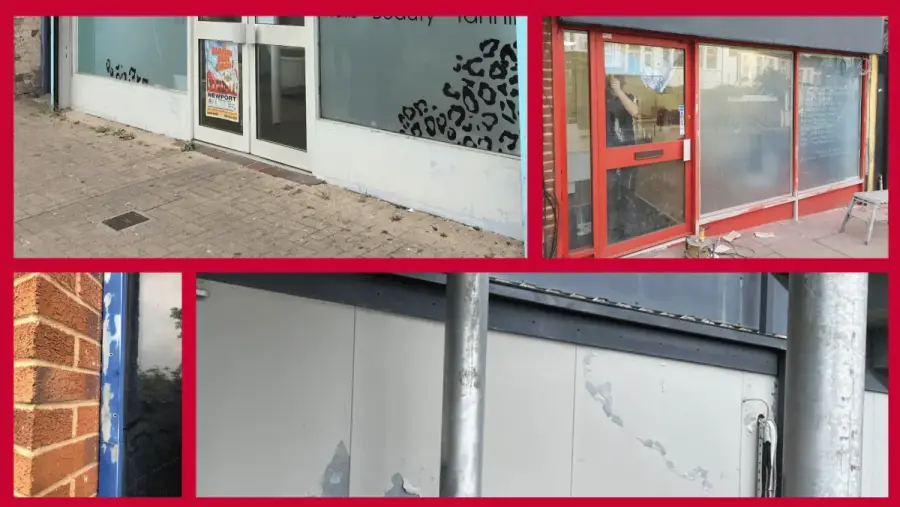
Powder coating was first used commercially in the 1960s as an environmentally sound alternative to solvent-heavy liquid finishes. Applied as a dry electrostatic powder and cured in an oven, a correctly produced film is hard, chemically resistant, and capable of lasting 15–25 years on architectural aluminium. But powder coating does fail, and when it does, it can fail in several distinct ways, each with its own cause and its own remedial response.
This guide covers the ten most common causes of powder coating failure on commercial metalwork, shopfronts, aluminium windows, curtain walling, lift doors, staircase sections, and explains what each failure type indicates about what went wrong during manufacture, application, or service.
Before examining causes, it helps to be precise about the failure mode you are observing. Each mode suggests a different root cause and a different remedial approach.
Large sections of coating detach cleanly from the substrate, often revealing bare metal beneath. Indicates adhesion failure at the substrate interface, typically caused by inadequate surface preparation or pre-treatment before the powder was applied at the factory.
Dome-shaped blisters form beneath the intact coating surface, sometimes breaking to leave pitted craters. Almost always caused by moisture or contamination trapped at the coating-substrate interface at the time of application, the trapped material expands and forces the film away from the metal.
Small discrete fragments break away at points of impact, particularly at edges and corners. Indicates a coating that is too brittle for its environment, caused by excessive film thickness, an incorrect powder formulation, or using an interior-grade product in an exterior or high-traffic location.
Fine or coarse cracks appear in the film surface, either in isolated zones or across a large area. Typically caused by thermal cycling stress acting on an overbuilt or over-hardened film that cannot flex with the substrate. Also associated with substrate movement and with recoating over an existing powder film without proper preparation.
The single most common cause of premature powder coating failure. Before powder can be applied, the aluminium or steel substrate must be chemically cleaned, degreased, and pre-treated to create the correct surface chemistry and profile for adhesion. If residues of drawing oil, fabrication lubricant, oxide layers, or mill scale remain on the surface, the powder film has no stable base, adhesion is compromised at the molecular level from the outset. In a factory environment, this pre-treatment typically involves degreasing, alkaline cleaning, acid etching, and chromate or chrome-free conversion coating. Any shortcut at this stage leads to early flaking.
Corrosion and coating failure begin at edges and corners significantly more often than on flat panel faces, yet edges are the hardest areas to coat adequately in powder application. The electrostatic charge that attracts powder to the substrate is weakest at sharp edges, and during curing the molten powder naturally flows away from sharp geometry under surface tension. The result is a consistently thinner film at every edge, often less than half the specified dry film thickness. This thinner film is more vulnerable to UV degradation, moisture ingress, and physical impact, and once corrosion begins at an edge, it tracks quickly beneath the adjacent intact film.
If a substrate carries any residual moisture, chemical pre-treatment residue, or surface contamination at the point of powder application, the subsequent curing cycle traps that material beneath the film as it fuses and hardens. During temperature cycling in service, the trapped material, water vapour in particular, expands and forces the film away from the metal, producing blistering. In factory settings, this is most common when pre-treated parts sit for too long before entering the coating line, allowing atmospheric moisture to re-contaminate the surface.
Powder coatings are formulated for specific performance environments, interior, normal exterior, severe exterior (coastal or industrial), and high UV exposure. Using an interior-grade product on an exposed facade, a standard exterior product in a coastal environment, or a smooth polyester where high flexibility is required all result in premature performance failure. The coating may look correct on application but will degrade far ahead of its intended service life. For UK commercial architectural use, the standard specification framework is Qualicoat Class 1 or Class 2, the latter providing significantly enhanced weathering resistance for demanding exposures.
Powder coating specifications for architectural aluminium typically call for a dry film thickness of 60–80 microns. Films below this range provide insufficient barrier protection against moisture and UV, corrosion begins sooner and progresses faster. Films significantly above this range, often applied in a misguided attempt to improve protection, become brittle and lose flexibility, making the coating prone to chipping on impact and cracking under thermal stress. Consistent, controlled film thickness within the specified range is critical; it requires calibrated application equipment and process control at the coating plant.
Powder coating cures through a chemical cross-linking reaction that requires the film to reach and hold a specified temperature, typically 180–200°C, for a defined time period. If the oven temperature is too low, the cure cycle is too short, the load is too dense for heat to penetrate evenly, or the thermocouple is poorly located, sections of the coating will be under-cured. Under-cured powder coating has reduced chemical resistance, reduced adhesion, and reduced mechanical strength, it chips, scratches, and degrades more readily under weathering than a fully cured film. Under-cure is particularly common on heavy section extrusions and complex assemblies where mass affects heat absorption.
Not all powder coatings are equivalent. Premium architectural powder coatings use higher-grade polyester resins and UV stabilisers; budget products reduce formulation cost through higher filler content and lower-quality resin systems. A low-cost powder may pass initial appearance checks but will exhibit markedly inferior weathering resistance, chalk earlier, and lose adhesion sooner than a quality architectural product. Specifying a Qualicoat-approved powder from a reputable manufacturer, and verifying that the coating applicator is themselves Qualicoat licensed, provides protection against material-driven premature failure.
Even a correctly applied, quality powder coating will eventually be degraded by UV radiation. UV light attacks the polymer binder in the coating, breaking molecular chains progressively, a process that first manifests as colour fade and chalking, then as loss of surface integrity. South and west-facing elevations degrade faster than north-facing sections on the same building, which is why patchy fading across an elevation is a reliable indicator of UV as the primary cause. Extended UV exposure combined with moisture cycling then accelerates progression toward flaking and adhesion loss in the most exposed zones.
Aggressive environments accelerate all failure mechanisms simultaneously. Coastal locations expose coatings to salt-laden air, chloride ions penetrate micro-defects in the film, aggressively undercut adhesion, and accelerate corrosion at any breach point. Industrial and urban environments introduce chemical pollutants and acidic deposition that chemically attack the polymer binder and any exposed metal. In these environments, maintenance cleaning frequency is critical, salt and pollutant deposits that are allowed to dwell on a coating surface cause far more damage than the same exposure on a regularly cleaned elevation.
The metal substrate itself can contribute to premature failure. Aluminium alloys with high silicon content, common in some casting alloys, can cause outgassing during curing, producing pinholes and blisters in the powder film. Steel substrates with residual mill scale or surface contamination from hot-rolling are similarly problematic. Fabrication defects, sharp cut edges, weld spatter, surface porosity in cast sections, all create localised points of vulnerability in the finished coating. Quality-controlled substrate material and adequate pre-treatment together define the upper bound of coating performance.
Edge failure is the most common entry point for wider coating breakdown. Corrosion that begins at an inadequately coated edge does not stay localised, it tracks laterally beneath the intact film surface through osmotic action, progressively lifting the coating from the substrate. By the time visible blistering appears on the panel face, the undermining may extend several centimetres from the edge. Early inspection and remediation of edge defects prevents progression to whole-panel failure.
When powder coating failure is identified, the decision between on-site restoration and full replacement depends on the extent and nature of the failure, the substrate condition beneath the coating, and the operational context of the building.
| Factor | On-site restoration | Full replacement |
|---|---|---|
| Typical cost | 60–80% less than replacement | Highest cost option |
| Operational disruption | Minimal, work done in situ | Significant, scaffold, removal, lead time |
| Suitable where substrate is sound | Yes, most appropriate option | Unnecessary if substrate is sound |
| Suitable where substrate is corroded through | Not appropriate, replacement required | Only viable option |
| Colour change possible | Yes, full RAL / BS colour range | Yes |
| Expected coating life after treatment | 10+ years with correct system | 15–25 years (factory powder coat) |
| Environmental impact | Low, no demolition waste or new manufacture | High, embodied carbon in new sections |
Where the substrate is structurally sound, the aluminium or steel section is intact and the failure is limited to the coating system, on-site restoration by a specialist contractor is the preferred remedial option. The process Vanda Coatings follows on commercial sites is as follows.
A systematic inspection of all affected surfaces, comparing north and south elevations, examining edge conditions, testing adhesion with cross-cut tape testing. The survey establishes which sections can be restored in situ and which, if any, require replacement due to structural substrate damage. A written report and specification follows.
All surfaces to be treated are thoroughly cleaned of atmospheric soiling, biological growth, and surface deposits using appropriate detergent cleaners. Traffic and operational areas are protected before cleaning begins. This stage is not optional, any contamination remaining on the surface before abrasion or priming will compromise the new coating system's adhesion.
All failing coating is removed by mechanical abrasion. Where corrosion is visible on the substrate, it is treated with appropriate inhibitor chemistry. Edges and corners, the primary failure initiation points, receive particular attention: the preparation extends beyond the visibly failed area to ensure a sound bond zone for the new coating system.
The entire surface, including areas where the original powder coating remains intact and stable, is abraded to remove the surface gloss and create the mechanical key that the new coating system requires to achieve adhesion. Any residual abrading dust is removed with tack cloths before priming.
Glass, glazing seals, surrounding brickwork or cladding, and all areas not to be coated are masked using appropriate film, foam tape, and decorator tape. On occupied commercial sites, overspray containment is a critical part of site preparation, masking extends beyond the immediate work area to protect building occupants and users.
An aluminium-compatible etch primer or self-etching primer is applied to all prepared surfaces immediately after cleaning, the window between preparation and priming is kept as short as possible to prevent re-oxidation. The primer creates the chemical and mechanical adhesion interface between the prepared substrate and the topcoat system.
A commercial-grade two-pack acrylic topcoat is applied by airless spray in two or more coats to the specified dry film thickness. The two-pack acrylic system provides durability, UV resistance, and colour stability well suited to UK commercial exterior conditions. Colour is matched to the client's specification from the full RAL and BS colour ranges, or colour-matched to retain the existing shade.
Vanda Coatings has been restoring failing powder-coated surfaces on commercial buildings across the UK since 1997. From individual shopfront bays to complete multi-storey curtain walling and window programmes, our on-site restoration process consistently achieves a durable result that preserves the building's appearance and extends the life of the existing metalwork. All work includes a written survey, a specified coating system, and a guarantee on the completed coating.
Powder coating flakes off primarily due to inadequate surface preparation before application, if the substrate was not properly cleaned, degreased, or pre-treated, the coating has no firm mechanical or chemical bond to hold onto. Flaking can also result from using the wrong powder formulation for the environment, insufficient film thickness, or incomplete curing. Once adhesion fails at the substrate interface, sections of coating lift and detach progressively.
Bubbling and blistering are almost always caused by moisture or contamination trapped beneath the coating at the time of application. As temperature changes after curing, trapped moisture expands under the film and forces it away from the substrate. Outgassing from porous aluminium castings and inadequately degreased substrates are the most common sources. In service, salt or water penetrating through micro-defects in the film can also cause osmotic blistering over time.
Powder coating chips when the film has insufficient flexibility to absorb mechanical stress. This results from excessive film thickness, overbuilt films become brittle, from using an interior-grade powder in an exterior or high impact environment, or from direct physical impact damage. Chipping typically initiates at edges and corners, where film build is hardest to control and where stress concentrates under impact loading.
Cracking in powder coating is usually caused by thermal cycling stress, the repeated expansion and contraction of the metal substrate under temperature changes, acting on a coating film that has cured too hard or been applied too thickly. A rigid film that cannot flex with the substrate fractures under repeated stress cycles. Cracking also occurs where a second coat is applied over existing powder coating without adequate surface preparation or where the total combined film thickness exceeds specification.
Correctly applied architectural powder coating on commercial aluminium should last 15–25 years in normal exposure conditions before significant colour fade or adhesion loss becomes apparent. Life expectancy is reduced in coastal environments, high-UV south-facing locations, or where maintenance cleaning is neglected. Qualicoat Class 1 sets the minimum performance standard for architectural powder coating; Class 2 provides enhanced weathering resistance for demanding exposures.
Yes, in most cases where the underlying aluminium or steel substrate is structurally sound, failing powder coating can be restored on-site rather than requiring full replacement. The process involves removing loose or failing material, treating any corrosion, abrading the remaining stable coating to create a bond key, priming with an appropriate primer, and applying a commercial-grade two-pack acrylic topcoat by airless spray. On-site restoration typically costs 60–80% less than like-for-like replacement and causes minimal operational disruption.

Related articles on powder coating and commercial surface restoration.
Why powder coating fades on commercial elevations, how to slow the process through maintenance, and when restoration is the right response.
Read ArticleHow to successfully re-coat existing powder-coated aluminium on-site, preparation sequence, primer selection, and coating system specification.
Read ArticleOur on-site aluminium window recoating service, airless-applied 2K acrylic system over prepared powder coat, with written guarantee.
View ServiceSee It In Practice
See how we recoated 1,800 m² of terne coated steel cladding at occupied office premises over a 10-day phased programme.
View Case StudyFree site surveys and quotes for powder coating restoration projects across the UK. Tell us the substrate, location, and extent of failure and we'll specify the correct remedial system.