Industrial Door Spray Painting
A complete guide to industrial door types, when recoating beats replacement, and how the preparation and application process works for all commercial door formats.
Read ArticleRoller shutter doors are fitted to most commercial and industrial premises across the UK. When the original factory finish ages, fades, or corrodes, on-site spray painting is the most cost effective way to restore appearance and protection. This guide covers the ten most common reasons businesses choose to respray, and exactly how the preparation and application process works.
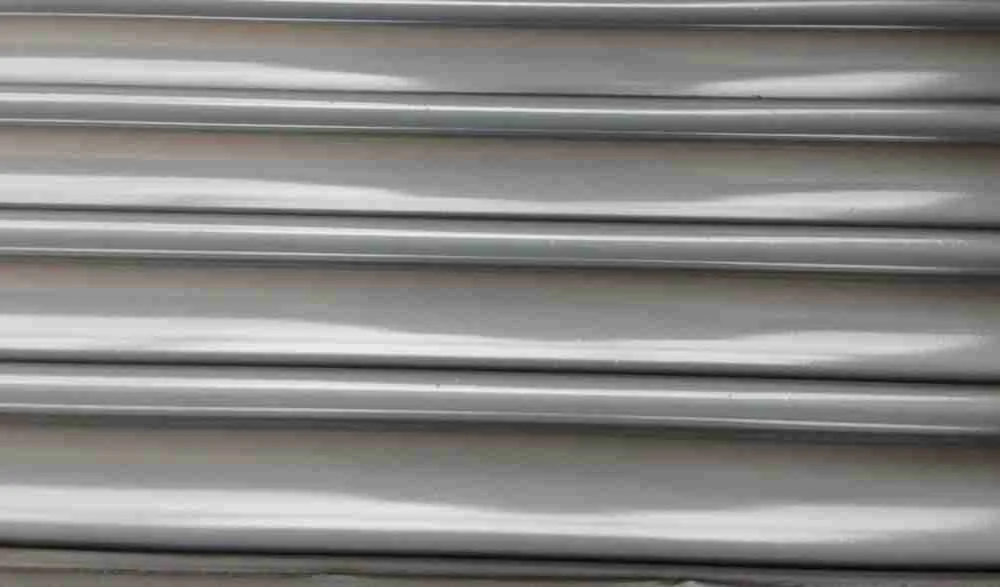
Roller shutter doors are fitted to the vast majority of shop fronts, industrial units, warehouses, car showrooms, and retail parks throughout the UK. They open vertically, rolling horizontal interlocking panels into a housing above the opening, saving internal headroom while providing secure closure. The panels are manufactured in galvanised steel or aluminium and are originally finished with a factory-applied powder coat or plastisol coating.
Over time, that factory finish chalks, fades, chips, or develops corrosion. On-site spray painting is the standard remedy, it restores both the appearance and the protective function of the coating without removing the door from the building, disrupting the mechanism, or incurring the cost and lead time of replacement.
Selecting the right colour is an important decision for brand consistency, particularly for retail premises. An experienced on-site spraying company will advise on the most appropriate coating system and deliver a professional respray to a high standard. The key element to achieving a lasting result is proper preparation, and that is where the quality of the work is won or lost.
These are the ten most common situations that lead commercial property owners, facilities managers, and business operators to commission a roller shutter door respray.
Roller shutter manufacturers typically offer a restricted palette at point of supply, often standard greys, whites, and browns. Respraying opens up the full RAL and BS colour range, allowing the shutter to match corporate brand guidelines, complement a building refurbishment, or stand out on the high street.
A new roller shutter door, supply, delivery, and installation, represents a substantial capital cost. On-site respraying typically costs 60–80% less. For premises with multiple shutters, the cumulative saving is considerable. Respraying is also a revenue expenditure (maintenance) rather than a capital expenditure, which can have accounting advantages for commercial operators.
Roller shutters that were originally supplied in bare aluminium, or whose original powder coat has faded to a chalky, washed-out finish, require a protective topcoat both for appearance and to slow the rate of surface oxidation. Aluminium does not rust, but it develops a dull oxide layer and pitting over time without a protective coating system.
Roller shutters on street-facing retail premises, car parks, and public-facing commercial buildings are frequent targets for spray can graffiti and marker pen tagging. Respraying removes the graffiti entirely and restores the original (or new) colour. Anti-graffiti topcoat systems can be specified as part of the respray to make future removal easier.
Building refurbishment programmes often involve recoating multiple elements, window frames, cladding, shopfront steelwork, and roller shutters, as a coordinated package. Respraying the shutters ensures they match the rest of the refurbished façade exactly, using the same coating system and colour throughout.
Fresh paint transforms the kerb appeal of a commercial property. A faded, stained, or outdated shutter colour can date a building significantly, whereas a crisp, clean respray in a contemporary colour gives the property a modern appearance that attracts better tenants or customers. For landlords managing retail units, this is a straightforward low-cost improvement.
A freshly resprayed shopfront or industrial unit presents significantly better than a tired one. For properties being marketed for sale or lease, the cost of a roller shutter respray typically returns several times its value through either a higher asking price or a shorter time to let. Estate agents and commercial property managers consistently find that well-maintained façades reduce marketing periods.
When a business changes hands or undergoes a brand refresh, corporate colour guidelines change with it. Respraying roller shutters in the new brand colour is the standard approach, far quicker and more cost effective than installing new shutters. For franchise operations and national retailers, this is a routine part of site handovers and brand rollouts.
Removing a roller shutter door from the building for offsite coating is rarely necessary and creates a period during which the premises are unsecured. On-site spraying means the shutter remains in place and fully operational, it is only in a temporarily lowered and masked state during the working period. Security is never compromised.
Professional on-site spray companies regularly complete roller shutter painting overnight or at weekends to minimise disruption. After de-masking and clean-up, the business is ready to operate normally the following morning. For retail premises that cannot close during trading hours, night working is the standard arrangement for this type of project.
The process for respraying a roller shutter door follows a consistent sequence. The preparation stage typically accounts for the majority of the time on site, and it is the quality of preparation, far more than the application itself, that determines how long the finish lasts.
Selecting the right colour is an important first step, particularly for retail premises where the shutter is a significant element of the overall brand presentation. RAL and BS colour charts are available for reference, and experienced spraying contractors can advise on which colours and finishes work best in the specific context. Gloss levels (matt, satin, semi-gloss, gloss) affect both the appearance and the durability of the finish, smooth-profiled shutters are generally best suited to satin or semi-gloss finishes.
All surfaces adjacent to the roller shutter, guide channels, bottom bar mechanism, surrounding brickwork or render, glazing, signage, and floor, are protected with decorator's tape and sheeting. Masking is particularly important on roller shutters as the profiled panel surface creates significant overspray during spraying. Thorough masking is not negotiable: contamination of adjacent surfaces is one of the most common causes of complaint on painting projects.
The shutter surface is cleaned with specialist degreaser applied with a cloth to remove oils, traffic film, salt deposits, and surface contamination. The degreaser must be completely wiped off with clean cloths, residue left on the surface prevents primer adhesion regardless of how thoroughly the mechanical preparation is carried out. This step is not optional.
The existing coating is abraded to remove gloss and create a mechanical key for the primer. On powder-coated surfaces, preparation time is greater, aged powder coat that has become chalky can require more extensive abrasion to ensure a sound substrate. On anodised aluminium, mechanical abrasion (rather than chemical etching) is the primary method of achieving adhesion. Areas of corrosion on steel panels are wire-brushed back to clean metal before priming.
Primer is applied immediately after mechanical preparation. The primer type is selected based on substrate: etch primer for bare galvanised steel or aluminium; adhesion primer for existing coated surfaces. Primer is applied by airless spray in a thin, even coat and allowed to flash off fully before topcoats begin. The primer coat is the adhesion bridge between the prepared substrate and the topcoat, skipping or thinning it to save time is the most common cause of early topcoat failure.
2K acrylic topcoat is applied by airless spray in multiple fine coats, typically two full passes to achieve the specified dry film thickness. Multiple thin coats are applied rather than a single thick one: thick coats are prone to runs, sags, and poor cure. The spray gun is kept at a consistent 30cm distance from the panel surface; passes overlap by 30–50% of the fan width to produce an even, uniform film. The profiled panel surface of a roller shutter requires particular care to ensure adequate coverage of all recessed areas.
Masking is removed carefully once the topcoat has cured to a tack-free state, typically within 2 hours at normal ambient temperatures. Any touch-in required at masked edges is completed before the operatives leave site. The surrounding area is cleaned, and the premises is left ready for business the following morning. On overnight projects, work begins after premises close and is completed before opening time.
Preparation determines longevity. The most common reason on-site roller shutter respray finishes fail prematurely is inadequate preparation, specifically, applying primer over a surface that has not been properly degreased or adequately abraded. A correctly prepared and applied finish on a roller shutter door will last 8–12 years. A poorly prepared finish on the same door may begin to peel within 12–24 months. This is why selecting an experienced, specialist contractor rather than a general painter matters considerably for this type of work.
Vanda Coatings uses a 2K acrylic (two-pack acrylic) coating system on all commercial roller shutter door projects. This system is the industry standard for on-site metalwork respraying because it delivers the combination of adhesion, durability, chemical resistance, and colour retention that single-pack paints cannot achieve.
2K acrylic is a two-component system, a pigmented base and a hardener, that cure by chemical cross-linking. The cross-linked film is significantly harder, more resistant to abrasion, and more resistant to chemicals than a single-pack air-drying paint. On correctly prepared metalwork, a well-applied 2K acrylic topcoat will typically last 8–12 years before recoating is required.
Available in any RAL or BS colour, in matt, satin, semi-gloss, or gloss finish levels to suit the installation and specification.
At Vanda Coatings, we use non-isocyanate 2K acrylic systems, avoiding the respiratory sensitisation hazards associated with isocyanate-based hardeners, without any compromise to film performance, colour range, or durability.
Yes, roller shutter doors are spray painted in situ. Removing the door and mechanism for offsite coating is rarely necessary. On-site spray painting means the door remains operational (bar the working day it is being coated), the mechanism is undisturbed, and no structural work is needed. The spraying operative works with the door in its lowered, closed position, with masking protecting the guide channels, mechanism housing, and surrounding surfaces.
A correctly prepared and applied 2K acrylic coating system will typically last 8–12 years before recoating is needed. The key determinants of longevity are the quality of surface preparation (particularly abrasion and priming of the existing powder coat), the dry film thickness of the topcoat, and the condition of the original coating before work started. Doors that receive thorough preparation consistently outperform those that receive superficial preparation.
The industry standard for on-site roller shutter door recoating is a 2K acrylic (two-pack acrylic) topcoat system, applied over an appropriate primer. 2K acrylic offers a combination of adhesion, abrasion resistance, colour retention, and chemical resistance that single-pack paints cannot match. It is suitable for both galvanised steel and aluminium substrates and is available in any RAL or BS colour in a range of gloss levels.
Yes, anti-graffiti topcoat systems can be applied over the standard primer and base coat on roller shutters in locations prone to vandalism. The anti-graffiti layer creates a surface from which spray paint and marker inks can be removed without damaging the underlying coating. This is particularly effective on retail premises, car parks, and public-facing commercial locations. We can include anti-graffiti specification in quotations for at-risk locations on request.
Cost depends on door dimensions, condition of the existing coating, colour specification, and the extent of preparation required. As a general principle, respraying is significantly cheaper than replacement, typically saving 60–80% of the cost of a new door. Free site surveys and quotes for all projects; pricing without a site visit is not reliable because the condition of the existing coating varies considerably from one installation to another.

Related articles on commercial door and metalwork recoating.
A complete guide to industrial door types, when recoating beats replacement, and how the preparation and application process works for all commercial door formats.
Read ArticleHow to recoat steel fire exit doors correctly, preparation steps, priming, topcoat specification, and compliance considerations for occupied commercial buildings.
Read ArticleOur on-site roller shutter door recoating service, 2K acrylic system, full preparation, any RAL colour, overnight and weekend working available across the UK.
View ServiceSee It In Practice
See how we transformed worn, faded roller shutter doors on a live commercial site using on-site airless spraying, with no removal required.
View Case StudyFree site surveys and quotes for roller shutter door respraying across the UK. Tell us your door dimensions, current condition, colour requirements, and any operational constraints, and we'll put together a programme that works around your business.