Acrylic Two-Pack Paint: The Complete Guide
What 2K acrylic paint is, how the chemistry of base and hardener works together, why temperature affects curing, and why it is the standard coating system for commercial metalwork.
Read ArticleCold temperatures affect adhesion, curing, and viscosity, making exterior metalwork painting genuinely problematic in winter. This guide explains the temperature thresholds that matter, why cold causes coating failures, and how commercial contractors plan and manage metalwork projects when the temperature drops.
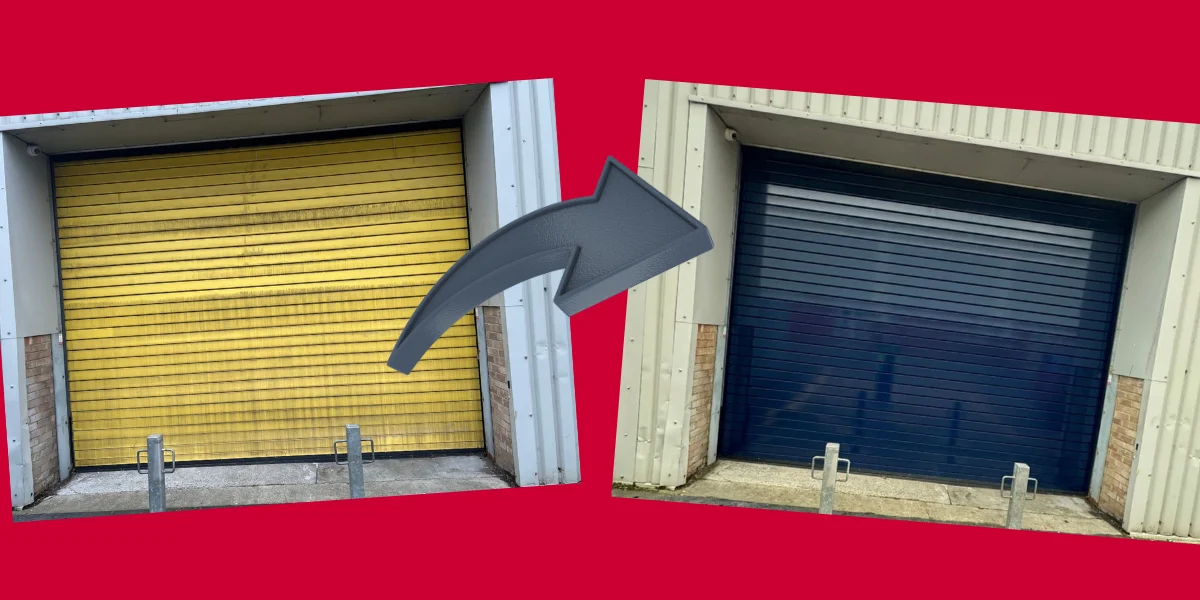
The short answer is: yes, external metal can be painted in cold weather, but not in all cold conditions, not with all coatings, and not without specific precautions that go beyond simply keeping the operative warm.
Cold weather creates three distinct problems for painting metal: it affects adhesion, it disrupts curing, and it changes paint viscosity. Each of these operates through a different mechanism. Understanding how they work explains why the temperature rules for commercial metalwork coating are not arbitrary, and why breaking them reliably produces coating failures that no amount of re-work can completely reverse.
This guide covers the temperature requirements, the specific failure modes that cold conditions create, how professional contractors manage exterior metalwork projects in winter, and what the practical options are when weather conditions fall outside the acceptable window.
Metal is an exceptionally efficient conductor of heat. In cold conditions, a metal substrate will rapidly equilibrate with the ambient air temperature, and if that temperature is at or below the dew point, invisible condensation forms on the surface continuously, even when it appears dry to the eye. A coating applied over a substrate carrying surface moisture, whether visible or not, will not bond to the metal. It will bond to the water film. As the surface dries out, the coating lifts away from the substrate, producing the characteristic blistering and delamination pattern of adhesion failure.
This is why the dew point rule, substrate temperature must be at least 3°C above the current dew point, is one of the most rigidly enforced requirements in professional metalwork coating. It must be measured with instruments, not estimated by visual inspection or personal judgement. Dew point and substrate temperature can be verified quickly with inexpensive measurement tools; failing to do so when conditions are borderline is a professional error that results in wasted materials and a failed coating.
Most liquid coating systems, including the 2K acrylic systems commonly used for commercial metalwork, cure through a chemical reaction: the base coat and hardener components react together after mixing to form a cross-linked polymer film. This reaction is temperature-dependent. Below a threshold temperature, typically around 5°C for most commercial coating systems, the curing reaction slows dramatically or stops entirely.
A coating that cannot cure does not develop its design properties. It remains soft, lacks chemical resistance, has poor abrasion resistance, and will not achieve the hardness needed to resist mechanical damage. In extreme cases, a coating that was applied and initially appeared satisfactory will never fully harden, remaining tacky for days or weeks, because ambient temperatures stayed below the cure threshold throughout the critical early hours and days after application.
Moisture ingress is the secondary consequence of impaired curing. An uncured or inadequately cured film has a disrupted polymer network that allows moisture to penetrate to the substrate surface. In combination with any pre-existing surface contamination, this creates conditions for corrosion blistering that would not occur with a fully cured film providing an intact moisture barrier.
Cold temperatures increase the viscosity of liquid coatings, making them thicker and more resistant to flow. For airless spray application, this creates practical difficulties: a too-viscous coating does not atomise correctly at normal operating pressures, producing a poor spray pattern with heavy edges, an uneven fan, and increased overspray. The coating is also less likely to flow out and level on the surface after application, resulting in texture and orange-peel effects that would not occur with the same material at its design application temperature.
In extreme cold, some solvent-borne coatings can partially gel or freeze in the container before they even reach the gun, making application impossible regardless of pressure settings. While this is an extreme condition rarely encountered in UK winters, it illustrates that the physical state of the coating itself is a relevant variable, alongside substrate temperature and ambient conditions.
The following table summarises the key environmental conditions and how they affect decision-making on exterior metalwork coating projects in cold weather. These are professional industry standards derived from coating manufacturer data sheets, they apply regardless of the contractor or coating method used.
| Condition | Threshold | Decision | Reason |
|---|---|---|---|
| Substrate temperature | Below 5°C | Do not coat | Curing reaction is impaired; adhesion cannot be guaranteed |
| Ambient temperature | Below 5°C | Do not coat | Film will not cure correctly; viscosity too high for good atomisation |
| Substrate vs dew point | Less than 3°C above dew point | Do not coat | Condensation forming on surface; coating will not bond |
| Frost present on substrate | Any frost visible or suspected | Do not coat | Frost prevents adhesion entirely; must be removed and surface verified dry |
| Forecast temperature | Below 5°C within 48h of application | Caution, defer if possible | Newly applied coating may not fully cure before cold returns; protect or reschedule |
| Substrate temperature | 5–10°C, at least 3°C above dew point | Proceed with caution | Acceptable but marginal, verify conditions with instruments; use cold-cure system if available |
| Substrate temperature | 10°C+, >3°C above dew point | Proceed normally | Standard application conditions met |
| Rain or wet surfaces | Any rain or wet substrate | Do not coat | Surface moisture prevents adhesion and will be trapped under the film |
Cold UK winters do not make exterior metalwork coating impossible, they make it more demanding and require more careful planning. The following steps reflect professional practice for managing projects when temperatures are low or variable.
Substrate temperature and dew point must be checked on site before coating begins each day. Do not assume conditions are the same as yesterday. A surface that was suitable at 11am may not be suitable at 8am the following morning if overnight temperatures fell to near freezing. Use a surface thermometer and a psychrometric chart or digital dew point calculator. Record the readings, this provides documentary evidence of compliance if any query about coating quality arises later.
Any frost on the substrate surface must be allowed to thaw fully and the resulting moisture allowed to evaporate before surface preparation begins, let alone coating. Never apply heat directly to frosted metal to force-thaw it: rapid thermal cycling can cause condensation at the metal surface by temporarily driving it below dew point. Allow natural ambient warming or use indirect heat sources to raise the ambient temperature around the work area. Verify the substrate is genuinely dry before starting preparation.
Not all coating systems have the same low-temperature application limits. Some specialist 2K systems are formulated for cold-cure application down to 2°C, with modified hardener chemistry that maintains an acceptable curing rate at low temperatures. Where continuous cold weather is expected, specifying a cold-cure system provides a significantly wider working window and more confidence in the cured film quality. Verify the specific product data sheet, not the manufacturer's general marketing claims, for the minimum application temperature and post-application temperature requirements.
Two-component coating systems require thorough mixing before use and then an induction period, the time after mixing during which the chemical reaction between base and hardener begins and the coating reaches its optimal application viscosity. In cold conditions, this induction period extends. A coating mixed and immediately applied at 5°C will not perform the same as the same material given its full induction period at 15°C. Read and follow the specific product data sheet induction time guidance for the temperature being worked at.
A freshly applied coating is at its most vulnerable in the hours immediately after application, before the film has developed sufficient hardness and chemical resistance to resist environmental stress. If overnight temperatures are forecast to drop near or below 5°C after exterior metalwork has been coated, the work should either be scheduled to avoid this scenario or physical protection provided, temporary enclosures, heat tents, or insulating covers over the coated surface, to maintain minimum curing temperature through the critical early period. An unprotected freshly applied coating exposed to near-freezing temperatures overnight can fail entirely, requiring full removal and restart.
The simplest way to manage cold-weather risk on a metalwork programme is to sequence the work so that interior metalwork, which is not subject to external temperature constraints, is addressed during the cold months, and exterior metalwork is scheduled for spring through autumn when ambient conditions are reliably within the acceptable application window. This is not always possible given project requirements, but it is the approach that minimises scheduling risk and maximises the probability of a durable first-time result.
Cold-weather coating failures are almost never recoverable by waiting. A coating applied at too low a temperature, over a surface carrying invisible condensation, or left to cure through frost will not correct itself as conditions improve. The compromised film must be removed back to the substrate, the substrate prepared correctly, and the coating re-applied under compliant conditions. This doubles the material cost and labour time of the job. The only economical approach to cold-weather coating is to comply with the temperature requirements before starting work, not to attempt to save time by working in marginal conditions.
On projects where deferral is not an option and ambient temperatures are below the application threshold, substrate heating can be used to bring the metal surface above the minimum coating temperature. This is done using indirect heat sources, warm air blowers, temporary heated enclosures, or radiant heat panels, rather than direct flame application, which risks thermal stress and surface contamination.
Substrate heating is effective but carries complications. The heated metal surface will begin to cool as soon as the heat source is removed, so the window between achieving the minimum substrate temperature and the coating being applied must be very short. In cold or windy conditions, a heated surface can drop back to a non-compliant temperature in minutes. For large surface areas, heating the substrate evenly and maintaining minimum temperature across the full work face simultaneously is difficult and operationally demanding.
The most reliable application of substrate heating in cold conditions is in conjunction with a temporary enclosure, a tent or scaffold-mounted sheeting system that contains the heat source and maintains the work environment above the minimum temperature throughout both application and the early curing period. This is a significant setup cost but is the only technique that provides reliable, controllable cold-weather exterior coating in genuinely cold conditions.
At Vanda Coatings, we plan the sequencing of our project programme around weather windows, carrying interior metalwork projects through winter and timing exterior programmes to align with forecast mild periods in spring and autumn. When exterior work cannot wait for better weather, we use cold-cure coating systems and verify all application conditions with instruments before work begins on each day. We do not compromise on substrate temperature or dew point compliance, the cost of a failed coating always exceeds the cost of a brief delay.
The minimum application temperature for most commercial liquid coating systems is 5°C for the substrate, the ambient air, and any surfaces within the working environment. Some specialist cold-weather coating systems allow application at temperatures as low as 2°C, but this requires specific product selection and verification against the product data sheet. The substrate temperature must also be at least 3°C above the current dew point, if it is not, condensation is forming on the metal surface even if it appears dry, and the coating will not adhere correctly.
Several types of failure result from painting metal at sub-threshold temperatures. Condensation on the substrate surface prevents proper adhesion, the coating bonds to the water film, not the metal, and lifts away as the surface dries. Cold temperatures increase paint viscosity, making atomisation difficult and application uneven. Most critically, the curing reaction in 2K coating systems slows dramatically or stops below 5°C, leaving a soft, uncured film that never achieves its design hardness, chemical resistance, or durability. These failures cannot be corrected after the fact, the coating must be removed and the job repeated correctly.
Yes, with correct preparation, the right coating system, and verified compliant conditions. The key requirements are: substrate and ambient temperature above 5°C and at least 3°C above dew point; all moisture, frost, and condensation removed from the substrate before coating; cold-weather or low-temperature coating systems selected where sustained cold conditions are expected; and newly applied coatings protected from cold during the initial curing period. UK winters regularly produce working windows of mild, dry days suitable for exterior metalwork coating, the skill is in scheduling work around those windows and not compromising when conditions are marginal.
Cold temperatures increase the viscosity of liquid coatings, making them thicker and more resistant to flow. For airless spray application, this produces poor atomisation, uneven fan patterns, and heavy edges. It also means that the coating is less likely to flow out and level on the surface after application, resulting in texture and orange-peel effects. Heating the paint can restore normal viscosity in controlled situations, but the substrate and ambient temperature requirements still apply independently, warming the coating material does not address the curing or adhesion risks on a cold substrate.
The dew point is the temperature at which water vapour in the air condenses onto a surface. When a metal substrate is at or below the dew point, invisible condensation is forming continuously, even if the surface looks and feels dry. Coating applied over a surface at or below dew point traps moisture at the metal-coating interface, leading to early adhesion failure, corrosion blistering, and coating delamination. The standard rule is that substrate temperature must be at least 3°C above the current dew point before coating can begin. This must be verified with instruments, a surface thermometer and a dew point calculator, not estimated visually.
Not necessarily, but interior metalwork is always more straightforward in winter because temperature and humidity can be controlled. For exterior metalwork, the pragmatic approach is to sequence work so that interior items are addressed through the coldest months, and to work around suitable weather windows for exterior items rather than deferring the entire programme to spring. When exterior work cannot wait, cold-cure coating systems and strict condition monitoring make winter exterior coating viable on suitable days. The hard rule is simple: never compromise on substrate temperature or dew point compliance.

Related articles on commercial metalwork coating application.
What 2K acrylic paint is, how the chemistry of base and hardener works together, why temperature affects curing, and why it is the standard coating system for commercial metalwork.
Read ArticleHow airless spraying works, how cold conditions affect viscosity and atomisation, and why it is the standard application method for large-scale commercial metalwork.
Read ArticleOur on-site aluminium window recoating service, properly sequenced around appropriate weather conditions, full preparation, and 2K acrylic coating for a durable, long-lasting result.
View ServiceFree site surveys and quotes for commercial on-site metalwork coating across the UK. Tell us what you have, where it is, and your project timeline, we'll advise on the right coating system and the optimal scheduling to guarantee a durable result.